If you’re looking to launch an Initial Coin Offering (ICO) in Poland, understanding the ICO legal requirements Poland is crucial. This guide dives into the key regulations, the role of the Polish Financial Supervision Authority (KNF), and the necessary steps to ensure compliance. You’ll learn about national and EU laws, white paper requirements, and anti-money laundering provisions to successfully navigate the ICO landscape in Poland.
Key Takeaways
ICOs in Poland are subject to both national and EU regulations, particularly the Markets in Crypto-Assets (MiCA) framework.
MiCA categorizes crypto-assets into three groups and imposes specific requirements on issuers, including the necessity of a detailed white paper to ensure transparency and investor protection.
Compliance with regulatory and GDPR is essential for ICOs in Poland, with non-compliance potentially resulting in significant penalties and sanctions from regulatory authorities.
Understanding ICOs and Their Legal Framework in Poland

Initial Coin Offerings (ICOs) are a popular fundraising method for cryptocurrency ventures, attracting investments from a diverse global audience with minimal regulatory oversight. In Poland, the legal landscape for ICOs is shaped by both the national law and European Union regulations to ensure transparency and protect investors. The Polish Financial Supervision Authority (KNF) plays a crucial role in overseeing these activities and ensuring compliance with the relevant financial regulations, particularly in relation to coin offering in Poland.
Navigating the legal framework for Initial Coin Offering in Poland requires knowledge of key regulatory bodies and the specific laws that govern these offerings. This foundational understanding aids both issuers and investors in managing the complexities of the Polish market.
Definition of ICOs
An Initial Coin Offering (ICO) is a fundraising method where new cryptocurrency projects sell their tokens to investors in exchange for legal tender or other cryptocurrencies. This mechanism allows companies to raise capital by issuing digital tokens, which can represent assets or utility within a network.
ICOs offer startups a more direct and often more efficient route to secure funding, bypassing traditional fundraising methods.
Regulatory Bodies
The primary regulatory body overseeing ICOs in Poland is the Polish Financial Supervision Authority (KNF), which acts as the financial supervisory authority. This entity is responsible for receiving the white paper prior to its issuance, and ensures that ICOs comply with financial regulations, offering a layer of protection to investors and maintaining market integrity. The KNF monitors ICO activities, including marketing materials, and enforces compliance with established legal frameworks.
MiCA Regulation and Its Impact on ICOs in Poland

The Markets in Crypto-Assets (MiCA) regulation aims to create a unified framework for crypto-assets across the European Union, addressing inconsistencies in previous regulations among Member States. For Poland, this means that ICOs will need to adhere to new, standardized rules that enhance legal clarity and investor protection. MiCA’s evolving legal environment will significantly change how ICOs are conducted in Poland, pushing companies to meet new standards to stay competitive.
MiCA’s comprehensive approach equips Polish companies to handle regulatory challenges and creates a clearer framework for investors, reducing uncertainties and fostering transparency.
Types of Tokens under MiCA Regulation
MiCA categorizes crypto-assets into three main groups: E-Money Tokens (EMT), Asset-Referenced Tokens (ART), and Other Crypto-Assets. E-Money Tokens aim to maintain a stable value for virtual currencies by referencing the value of a single official currency and must be issued by credit institutions or electronic money institutions.
Asset-Referenced Tokens aim to maintain a stable value by referencing another value or right, including one or more official currencies.
The third category encompasses most other types of crypto-assets, including utility tokens, which are not categorized as ART of EMT.
Requirements for Issuers
Issuing crypto-assets under MiCA requires providing accurate information about the tokens and their risks. This includes preparing a detailed white paper, notifying the competent authority, and ensuring marketing communications are consistent with the white paper and applicable regulations.
Issuers must be a legal person, meaning they cannot be a natural person or unincorporated organizational entities to which the law grants legal capacity
Another crucial aspect is preparation of crypto-asset white paper, which has to be compliant with MiCA Regulation. After its issuance, the crypto-asset white paper must be notified to the relevant competent authority and published on the issuer’s website.
If any marketing communications are used, they must be drafted in accordance with the rules and published. These communications should be fair, clear, and not misleading, and consistent with the information in the white paper.
For offers without a time limit, the number of crypto-assets in circulation must be published on the issuer’s website at least monthly.
For offers with a time limit, there must be effective arrangements to monitor and safeguard funds raised, ensuring they are kept in custody by a third party.
Issuers must act honestly, fairly, and professionally. They must also communicate with holders and prospective holders in a fair, clear, and not misleading manner, and identify, prevent, manage and disclose any conflicts of interest.
Issuers are required to maintain all systems and security access protocols in conformity with appropriate Union standards.
Issuers, including members of their management bodies, are subject to civil liability rules for the information provided in the crypto-asset white paper.
For E-Money Tokens, issuers need to be authorized as either a credit institution or an electronic money institution.
White Paper Requirements for Crypto-Assets

A white paper is a critical document in the ICO process, serving as a comprehensive guide that outlines the project’s details, offering terms, and associated risks. Recent regulations make drafting a white paper a regulatory requirement, emphasizing transparency and investor protection.
White papers must follow specific formats to ensure consistent information presentation. The content must be clear, fair, and not misleading, providing investors with necessary information for informed decisions.
Content of White Papers
A crypto-asset white paper must detail the offeror, issuer, trading platform operator, and project. This includes key features, milestones, as well as a clear statement on the rights and obligations attached to the crypto-asset and a prominent disclaimer of non-approval by any competent authority.
The white paper must be in an official language of the home Member State or a language common in international finance, ensuring accessibility and understandability for potential investors from various regions.
Submission Process
Submitting a crypto-asset white paper requires notifying the competent authority of the home Member State at least 20 working days before publication. The notification should explain why the crypto-asset is not excluded from the regulation and list the host Member States for the offer.
The competent authority will notify the host Member States and communicate the white paper to the European Securities and Markets Authority (ESMA), which maintains a public register.
Exemptions from White Paper Obligations
Certain ICOs are exempt from white paper obligations, such as those offering crypto-assets for free or created as rewards for maintaining a distributed ledger.
Additionally, offers made to fewer than 150 persons per Member State or solely to qualified investors are also exempt.
Compliance and Reporting Obligations

Adhering to ICO regulations in Poland involves following the MiCA framework and anti-money laundering rules to ensure transparency and legal compliance. Regular audits and thorough documentation are essential to demonstrate compliance and avoid penalties.
ICO issuers must also comply with General Data Protection Regulation, ensuring lawful and secure handling of personal data protection as a data subject with adequate protection and appropriate safeguards, as outlined by the European Data Protection Board.
Under GDPR, ICO issuers must ensure that they have a lawful basis for processing personal data. Regular audits are recommended to verify compliance and avoid penalties, such as those faced by a prominent financial institution in 2023 for inadequate data handling practices.
GDPR compliance is crucial to protect personal data and maintain investor trust.
Penalties for Non-Compliance
Non-compliance with regulations applicable to ICOs can lead to significant penalties. Authorities can impose fines, suspend or prohibit offers, and investigate market abuse. They can also require amendments to white papers or marketing communications if regulations are not met.
In severe cases, authorities can order the cessation of activities, withdraw authorizations, or impose temporary bans on responsible individuals. Understanding these penalties helps ICO issuers remain compliant and avoid serious consequences.
Practical Steps for Launching an ICO in Poland
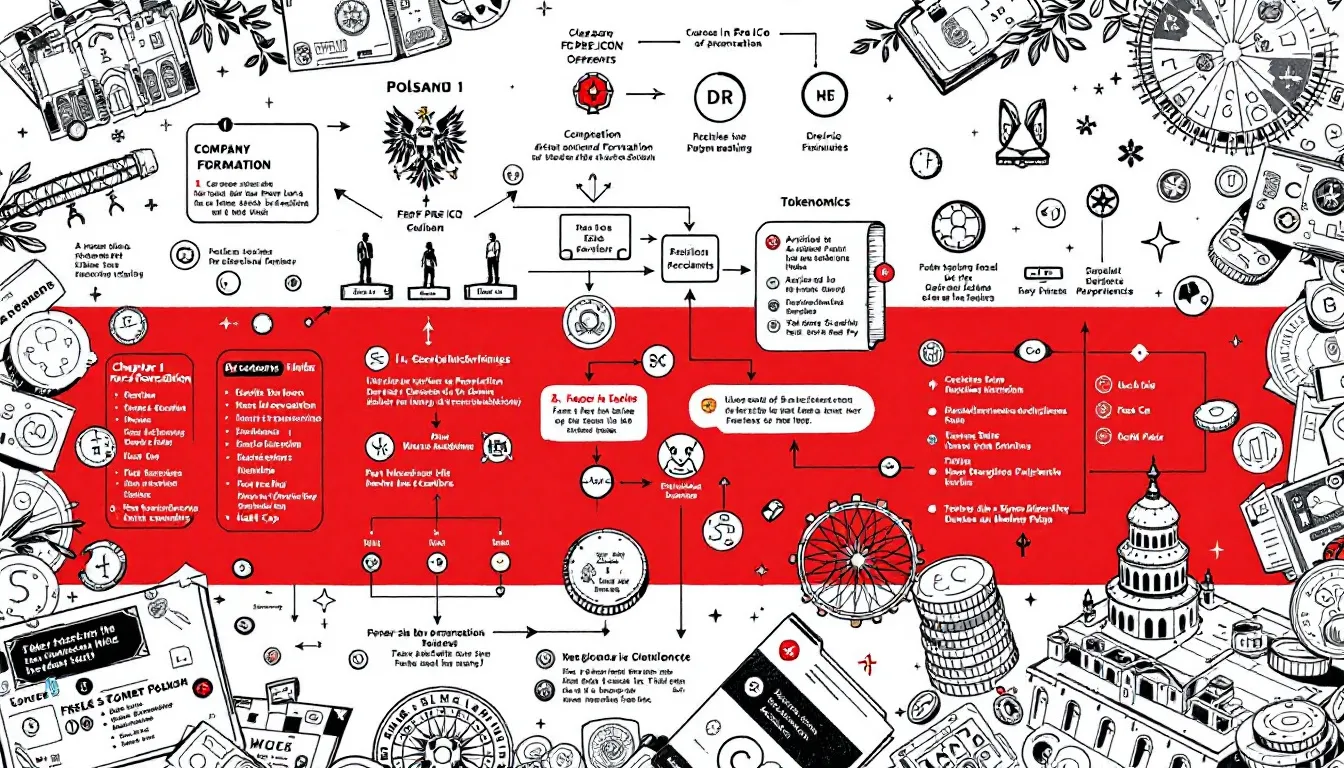
Launching an ICO in Poland demands detailed planning and adherence to local regulations. It starts with a thorough risk assessment to identify potential legal, financial, and operational risks, helping to mitigate issues during the process.
Engaging a law firm specializing in ICOs helps navigate the complex legal landscape, ensuring all regulatory requirements are met and providing a solid foundation for the ICO.
Registering the legal entity and drafting a comprehensive crypto-asset white paper are crucial steps for ensuring compliance and transparency.
Preliminary Risk Assessment
Before launching an ICO, businesses should conduct a comprehensive risk assessment to evaluate potential legal, financial, and operational risks, including market volatility and regulatory changes. This thorough evaluation aids in making informed decisions and mitigating potential pitfalls.
Engaging a Law Firm
Consulting a law firm with expertise in ICO regulations is essential for navigating the legal framework. A specialized firm can provide guidance on compliance, help draft necessary documents, and ensure all regulatory requirements are met.
Registering the Legal Entity
Company formation in Poland involves registering with the National Court Register, obtaining a Tax Identification Number (NIP), and securing appropriate business licenses. This establishes the legal framework necessary to operate within regulatory guidelines, a crucial step for any business planning to launch an ICO.
Summary
Navigating the legal landscape for ICOs in Poland requires a thorough understanding of both national and European regulations. From the initial definition and regulatory bodies to the detailed requirements under MiCA and the importance of white papers, each aspect of applicable law plays a critical role in ensuring a successful ICO. Compliance with anti-money laundering rules and data protection requirements further underscores the need for meticulous planning and legal consultation.
In conclusion, launching an ICO in Poland is a complex but manageable process with the right knowledge and resources. By following the practical steps outlined in this guide and engaging the necessary legal expertise, issuers can ensure that their ICO is compliant, transparent, and well-positioned for success. Staying informed and proactive in addressing regulatory changes will be key to navigating this dynamic market.